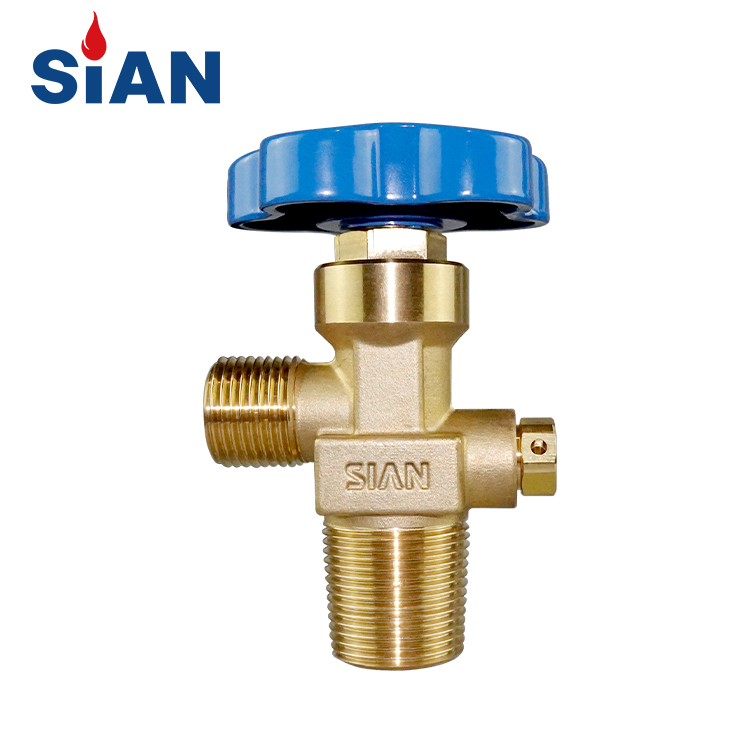
Industrial and medical gas facilities face mounting pressure to optimize their operations continuously. Margins remain tight across the industry. Every minute wasted on the filling floor impacts overall profitability. Cylinder purging is often accepted as a standard operational procedure. However, you should view it as a significant drain on facility labor, gas yield, and turnaround time.
When standard cylinders return empty from the field, ambient air and moisture inevitably backflow into the open vessel. Restoring the internal gas purity then requires resource-intensive vacuum and purge cycles. This repetitive cycle bottlenecks daily production. It also accelerates wear on critical filling equipment. Fortunately, there is a much better way. We can introduce a mechanical operational shift. Trapping a baseline positive pressure mechanically eliminates the condition necessitating heavy purging in the first place.
The residual pressure valve is the key to protecting cylinder integrity passively. Readers will learn how modern valve technologies prevent contamination, evaluate specific gas requirements, and measure the operational impact of fleet upgrades.
Key Takeaways
Mechanism: A residual pressure valve (RPV) retains a strict positive pressure (typically 3-5 bar / ~50-75 psi), blocking ambient air and moisture ingress.
Gas-Specific Requirements: O2, CO2, and inert gas applications demand specific valve materials and safety certifications to handle distinct behavioral properties.
Implementation Reality: Upgrading a cylinder fleet requires transitioning to specific filling adapters (RPV pins) and managing end-user education.
The Business Problem: The Hidden Costs of Cylinder Contamination
Imagine a busy welding shop or a demanding hospital ward. Workers consume gas until the flow stops completely. The pressure gauge reads exactly zero. At this critical stage, the cylinder becomes highly vulnerable to its surroundings. When the internal pressure equals the external atmospheric pressure, a natural equilibrium occurs. Ambient air rushes in to fill the void.
This air carries microscopic water vapor. It carries fine industrial dust. Once inside, these contaminants stick to the internal metal walls. They become incredibly difficult to remove. High-purity medical or specialty gases require a pristine internal surface. Even microscopic contamination ruins the next batch. Facilities cannot risk this purity failure. To fix this vulnerability, they rely on mandatory purging before refilling.
Purging carries heavy hidden financial burdens. We can break down these core inefficiencies clearly:
Labor Hours: Technicians spend significant time venting, vacuuming, and testing each cylinder manually. This limits how many units one worker processes daily.
Product Loss: Facilities use pure, expensive gas just to flush the contaminated vessel. You literally vent valuable inventory into the atmosphere.
Equipment Wear: Constant vacuuming degrades facility pumps quickly. Maintenance schedules shorten. Replacement parts increase your facility overhead.
An effective solution must work passively. It cannot rely on the end-user. Users often forget to manually close the valve before the cylinder empties completely. We need a system that prevents contamination automatically without human intervention.
How a Residual Pressure Valve Mechanically Prevents Backflow
The core technology relies on a highly responsive integrated spring-loaded cartridge. This precise mechanism lives deep inside the primary valve body. It continuously monitors the internal cylinder pressure during operation. The cartridge contains a specialized piston and a highly calibrated tension spring. When you open the valve handle, gas flows past this piston. The high internal pressure easily compresses the spring.
As the cylinder empties, this internal pressure steadily decreases. The spring begins to decompress. When the pressure drops to an engineered threshold, it acts immediately. Usually, this automatic shut-off point sits around 3 to 5 bar. The spring fully extends. It pushes the piston against the valve seat. It locks the remaining gas inside automatically. This trapped baseline pressure acts as an invisible, impenetrable shield against ambient air. Atmospheric pressure cannot overcome this internal barrier.
Many advanced designs also incorporate a non-return valve (NRV). This synergy is absolutely crucial for modern applications. The integrated check valve allows outward flow to the user application freely. However, it strictly forbids any reverse flow. Imagine a user connects a higher-pressure contaminated line by mistake. The NRV immediately blocks this reverse pressure. You avoid cross-contamination entirely.
International standards dictate exactly how these components perform. Guidelines like ISO 10297 and ISO 15996 ensure baseline reliability. They mandate rigorous testing endurance under harsh simulated conditions. A certified valve guarantees strict performance metrics over thousands of operational cycles. You gain immense peace of mind knowing the mechanical safeguard works.
Gas-Specific Evaluation Criteria: Selecting the Right Industrial Gas Valve
Different gases display uniquely volatile behavioral properties. You cannot use a universal approach for all cylinders. Selecting the correct mechanism requires careful technical evaluation based on the stored medium.
Evaluating O2 Applications
Oxygen systems carry severe ignition risks under pressure. You must select a specialized O2 Residual Pressure Valve to ensure absolute safety. These specific valves undergo mandatory adiabatic compression testing. Medical and industrial oxygen require absolute certainty. A single spark inside a high-pressure oxygen cylinder causes catastrophic failure. Certifications from bodies like BAM simulate this exact worst-case scenario. They rapidly pressurize the valve to generate immense friction heat. The valve must survive this without igniting. Strict material compatibility remains non-negotiable. Manufacturers use high-grade brass or specialized bronze alloys. They install highly specific oxygen-compatible elastomers.
Evaluating Inert & Specialty Gases
Preserving high-purity gases like Grade 5.0 argon requires absolute moisture exclusion. A dedicated N2/Ar/He Residual Pressure Valve seals out even microscopic atmospheric humidity. This maintains the strict chemical profile required by laboratories and electronics manufacturers. Any moisture ingress would ruin these sensitive calibration gases. These valves often utilize distinct polymer seals. Engineers optimize them for incredibly low permeability.
Evaluating CO2 Applications
Carbon dioxide presents a distinct, aggressive physical challenge. Rapid discharge causes intense Joule-Thomson cooling effects. This extreme temperature drop can lead to internal freezing or dry ice formation. A robust CO2 Residual Pressure Valve uses highly advanced seating materials. These specific elastomers resist cold-flow distortion. They maintain a perfect, tight seal even at sub-zero temperatures. Standard rubber would simply crack or deform here.
General Assessment
Regardless of the specific gas, any reliable Industrial Gas Valve must meet foundational durability metrics. You should rigorously evaluate the overall cycle life. Handwheel ergonomics matter greatly for daily operator comfort and safety. Additionally, burst disc reliability ensures critical overpressure protection during extreme heat exposure.
Gas-Specific Valve Material and Certification Comparison
Gas Type
Primary Challenge
Required Certifications / Testing
Material Focus
Oxygen (O2)
Ignition under rapid pressurization
BAM, Adiabatic compression
Brass, Bronze, O2-safe elastomers
Inert (N2, Ar, He)
Moisture ingress and purity degradation
ISO 15996 purity standards
Low-permeability specialized polymers
Carbon Dioxide (CO2)
Joule-Thomson freezing effects
Extreme cold cycle testing
Cold-flow resistant seating
ROI and Operational Impact: Is the Fleet Upgrade Justified?
Decision-makers often hesitate at the initial procurement price tag. These advanced mechanisms carry a premium cost compared to standard O-ring or diaphragm models. However, the long-term operational savings easily justify the initial capital expense. You secure a massive financial return over the equipment's lifecycle.
First, consider your daily turnaround velocity. Standard operating procedures dictate a rigorous three-cycle purge-and-fill routine. A standard purge involves pulling a deep vacuum, injecting pure gas, and venting it. You repeat this three times. Each cycle consumes valuable operator time. Each cycle consumes facility electricity to run the heavy-duty vacuum pumps. By retaining internal positive pressure, you bypass this bottleneck entirely. Cylinders move straight from inspection to the direct fill station. You save an estimated ten to fifteen minutes per cylinder. Across thousands of units processed monthly, this significantly accelerates your entire supply chain.
Second, gas preservation generates massive immediate savings. Purging requires flushing the vessel with pure, sellable product. You waste valuable gas every single time you clean a cylinder. Pressure retention completely eliminates this wasted flush-gas across your annual fleet cycle.
Finally, asset protection acts as a critical financial factor. Preventing atmospheric moisture ingress stops internal cylinder corrosion in its tracks. Rust actively degrades structural integrity over time. A moisture-free interior extends mandatory hydrostatic testing intervals. It ultimately maximizes the operational lifespan of your expensive cylinder assets.
Implementation Risks and Fleet Adoption Realities
Upgrading an entire fleet requires a highly clear transition strategy. Facilities face mandatory operational changes that demand careful planning and clear communication.
Facility Retrofitting and Manifold Upgrades
Standard filling connectors will absolutely not work with these new valves. The internal check valve actively blocks incoming gas from standard equipment. Facilities must equip their filling manifolds with specific adapter pins. We often call these RPV filling adapters. These mechanical pins physically depress the internal cartridge during the refill process. This action bypasses the non-return mechanism safely. Facility managers must budget for these manifold upgrades before deploying the new cylinders. Your facility technicians also require updated training. They must learn how to inspect the adapter pins daily. A bent or damaged filling pin will fail to depress the internal cartridge. This disrupts the filling process and potentially damages the valve mechanism.
Maintenance Considerations and Lifecycle Management
You must evaluate cartridge lifespan before standardizing any fleet. All moving parts eventually wear out. Clarify whether the internal cartridge can be serviced locally at your facility. The absolute best designs feature field-replaceable cartridges. You can swap out a faulty internal spring without scrapping the entire expensive valve body. This modular approach saves significant maintenance capital over time.
Customer Success and End-User Misconceptions
End-users often completely misunderstand how the new technology works. This remains a very common friction point during initial rollouts. Customers might angrily return a cylinder claiming it is defective. They aggressively point out that the gas stopped flowing, but the gauge still reads 50 psi. You must update product labeling clearly to prevent this confusion. Client education prevents unnecessary technical support calls. Teach them that this remaining pressure is an intentional, highly engineered protective feature.
Conclusion
Transitioning to advanced valve technologies fundamentally changes modern cylinder management. You shift critical contamination control from a reactionary process to a preventative one. Instead of relying on expensive, time-consuming purging, you ensure consistent pressure retention. This mechanical safeguard works flawlessly in the background. It protects your gas purity without requiring user intervention.
When evaluating potential vendors, prioritize highly specific engineering traits. Advise your procurement teams to look for modular internal designs. Demand proven cycle-testing data from independent laboratories. Always verify specific safety certifications tailored for your target gas blends. Quality documentation separates superior valves from inferior imitations.
Do not attempt a massive, overnight fleet overhaul. We strongly recommend initiating a focused pilot upgrade first. Select a specific, high-value fleet segment. High-purity argon or medical oxygen cylinders serve as perfect initial candidates. Track the actual measurable reduction in turnaround time carefully. Monitor the decrease in wasted flush-gas. Use this concrete baseline data to justify a comprehensive full-scale rollout later.
FAQ
Q: Do I need special equipment to fill a cylinder equipped with a residual pressure valve?
A: Yes, standard fill connectors will not work. You must use specialized filling adapters, often called RPV pins. These adapters mechanically depress the internal cartridge. This action opens the flow path. It allows new gas to enter the cylinder safely during the refill process.
Q: Can an RPV completely eliminate the need for cylinder vacuuming?
A: Under normal operational conditions, yes. If the valve functions correctly and retains its baseline positive pressure, atmospheric contamination remains blocked. This passive protection allows operators to skip heavy vacuuming. You can proceed with direct refilling immediately after standard external safety inspections.
Q: What happens if the residual pressure valve fails or gets stuck?
A: Mechanical failures usually result in the valve acting like a standard model. It loses its residual pressure entirely. Sometimes, a jammed cartridge prevents refilling. You can mitigate long-term downtime by following proper maintenance schedules. Always select valve designs featuring field-replaceable cartridges for quick, cost-effective repairs.
Q: Are residual pressure valves mandatory for medical gases?
A: Regulations vary significantly by region. They are strongly enforced across the European Union under strict ISO standards. They are also increasingly adopted in the US market. These advanced valves are rapidly becoming the global standard for medical oxygen. They guarantee uncompromising patient safety and continuous gas purity.
Room 803, Building 1, Qianjiang Shenlan International Center, Yingfeng Street, Xiaoshan District, Hangzhou, Zhejiang 311200, China (Zip Code: 311200)

 Hot Line:+86 571 8768 0216