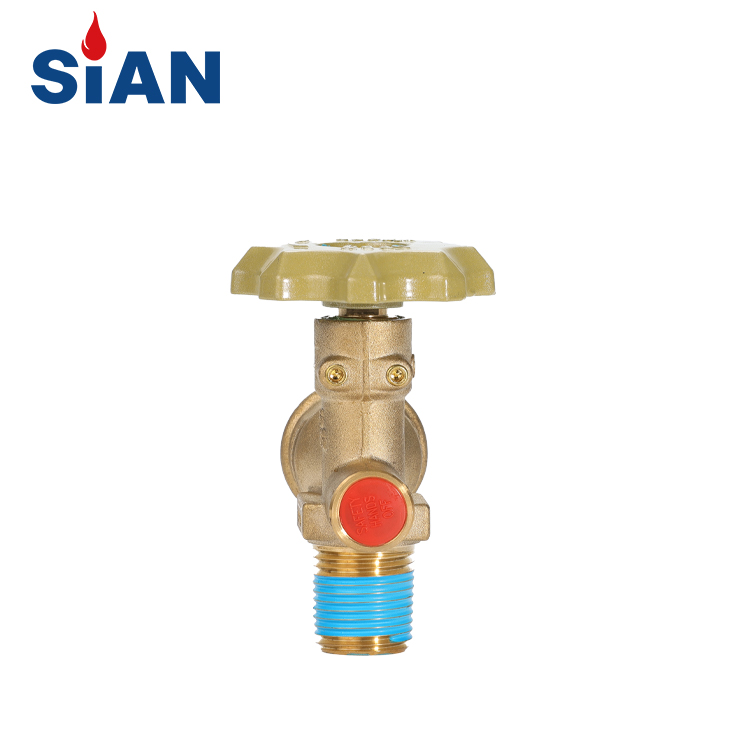
For LPG distributors, the daily stakes are undeniably high. A single valve failure out in the field means far more than minor gas loss. It directly translates to severe safety hazards and massive regulatory liabilities. You face a constant, high-pressure sourcing challenge. Procurement must successfully balance the unit cost of bulk orders against non-negotiable safety standards and long-term mechanical durability. We designed this comprehensive guide to establish a concrete, technical evaluation framework. Procurement managers and safety officers desperately need actionable metrics to verify supplier claims. By applying these strict criteria, you can confidently source a pol valve for lpg engineered for absolute zero-failure performance. You will learn exactly how to assess deep material integrity, decode complex certification documents, and evaluate a manufacturer’s true production capabilities.
Key Takeaways
Material integrity is paramount; prioritize forged brass over cast alternatives to prevent micro-porosity and high-pressure leaks.
A certified pol valve for lpg must feature verifiable documentation for regional standards (e.g., DOT, UL, ISO) and integrated safety relief mechanisms.
Vetting a manufacturer requires looking beyond price to assess their internal testing protocols (e.g., 100% helium leak testing vs. random batch testing).
Awareness of regional phase-outs (like the transition to LCC27 in certain markets) is critical to avoid investing in soon-to-be obsolete inventory.
The business impact of substandard LPG valves
Cheaply manufactured valves carry immense, hidden operational risks. When a substandard valve fails, product recalls immediately drain your company resources. Regulatory fines from local fire marshals or industrial safety boards quickly erase any initial purchase savings. In extreme, repeated cases, severe safety violations can cost a gas distributor their operating license. You simply cannot afford to cut corners on primary containment components.
Field failures directly and irreparably damage your brand reputation. When end-users encounter stuck handwheels, they often resort to using heavy tools. This improper leverage causes immediate thread stripping or internal stem damage. They ultimately lose trust in your equipment. This operational friction ruins critical B2B partnerships, such as industrial forklift fleets relying on your fuel. It also destroys B2C customer retention in residential heating markets.
To effectively protect your business, you need strictly defined success criteria. A truly reliable pol valve must deliver consistent, uninterrupted flow rates under various environmental conditions. It must maintain an absolute zero-leak tolerance during intense ambient pressure fluctuations. Standardized thread engagement is strictly non-negotiable. It guarantees seamless operational efficiency across your entire refilling infrastructure. Without these baseline performance metrics, you expose your fleet to constant maintenance cycles.
Material integrity: specifying a brass POL valve
Material choices entirely dictate your product lifespan. Distributors must mandate hot-forged bodies when sourcing a brass pol valve for commercial fleets. The industrial forging process applies immense heat and mechanical pressure to solid metal billets. This exact process aligns the metallic grain structure. It entirely eliminates internal voids and micro-porosity. Conversely, cast brass inevitably hides microscopic air pockets. Over time, high-pressure gas forces its way through these weak points, causing continuous micro-leaks.
Corrosion resistance represents another vital material requirement. Your cylinders face harsh outdoor environments, enduring freezing rain and high humidity. You must specify high-grade brass alloys like CW617N or HPb59-1. These advanced alloys naturally resist dezincification. Dezincification occurs when zinc leaches out of the metal, leaving behind highly brittle copper. Using premium alloys ensures the structural integrity remains perfectly intact over a decade of rigorous use.
You must also meticulously verify all secondary components. A robust outer body cannot compensate for weak internal seals.
Relief valve springs: They strictly require high-tensile stainless steel. This prevents internal rust and guarantees a precise, repeatable pop-action during overpressure events.
O-rings and soft gaskets: You must demand synthetic rubber formulated specifically for LPG exposure. NBR (Nitrile) or Viton variants provide superior chemical resistance against liquid propane degradation.
Handwheels and stems: Ensure they utilize impact-resistant polymers or reinforced, thick-walled metals. They must survive rough transport and physical drops.
Common Mistake: Do not blindly assume all brass alloys perform equally. Always request verified material composition certificates from the smelting batch.
Verification checklist for a certified POL valve for LPG
Verifying technical compliance actively prevents disastrous field failures. Thread standards require your strictest adherence. In North America, the CGA 510 standard precisely dictates left-hand internal thread dimensions. You must ensure machining tolerances remain exceptionally tight. Proper, precision machining guarantees seamless, leak-free cylinder connections every single time. Poorly cut threads will cross-thread easily, ruining the entire cylinder asset.
Next, you must evaluate the Pressure Relief Valve (PRV) mechanisms. This component alone prevents catastrophic cylinder explosions during thermal expansion. The PRV requires flawless, precision calibration. You must verify its exact pop-action release and subsequent reseating pressure requirements. If the spring vents too late, internal pressure builds to critical limits. If it fails to perfectly reseat after venting, you lose entire cylinders of valuable gas inventory into the atmosphere.
Compliance documentation proves these engineering capabilities. You need to confidently source a certified pol valve for lpg backed by rigorous, external audits.
Required Compliance Documents
Document Type
Issuing Body
What It Verifies
ISO 9001 Certificate
Independent Auditor
Consistent quality control and standardized manufacturing processes.
Material Mill Test Report (MTR)
Raw Material Supplier
Exact chemical composition and purity of the brass alloy.
UL / DOT / Pi Certification
Recognized Testing Lab
Design safety, exact PRV calibration, and regional legal compliance.
Tip: Actively warn your purchasing team against accepting self-certified factory documents. Independent, third-party lab verification remains the only reliable proof of technical safety.
Navigating industry transitions and legacy compatibility
The global LPG industry constantly evolves its safety standards and connection profiles. You must navigate these structural transitions carefully to protect your capital investments. Safety upgrades now heavily feature integrated Overfill Prevention Devices (OPD). Modern commercial fleets also embed excess flow limiters alongside standard POL connections. These vital mechanisms instantly restrict flow, preventing catastrophic leaks if a line violently severs.
Regional phase-outs require your immediate strategic planning. For example, Australia is actively forcing a transition to newer LCC27 connections. These modern profiles prevent gas flow unless a positive connection is fully secured. Regulatory shifts like this force regional distributors to manage legacy inventory cautiously. You must deliberately avoid investing heavily in soon-to-be obsolete equipment. Always monitor local regulatory announcements and fire safety board updates.
Fleet scalability demands a clear framework. When expanding your footprint, you face a tough operational choice. Do you retrofit older cylinders, or do you strictly source new compliance-ready valves? We recommend a highly systematic, phased approach.
Audit your current fleet age and sort cylinders by their requalification dates.
Replace valves aggressively on older cylinders nearing their mandatory 10-year testing cycle.
For all new fleet expansions, strictly prioritize modern, upgraded connections to seamlessly future-proof your asset investment.
Evaluating manufacturers for heavy-duty POL valve supply
Finding a reliable manufacturing partner requires intense, continuous scrutiny. You need operational testing transparency above all else. Demand absolute proof of their internal quality control measures. A highly reputable manufacturer utilizes 100% pneumatic or mass spectrometer helium leak testing. They meticulously test every single unit on the final assembly line. You should never accept random batch sampling for high-pressure gas equipment. Helium molecules are incredibly small; if a valve passes a helium test, it will easily contain LPG.
Production capacity directly impacts your seasonal operations. You must properly assess a supplier's raw material sourcing stability. This critical assessment helps you completely avoid stockouts during peak winter heating seasons. Ask hard questions about their brass inventory buffers, tooling maintenance schedules, and global shipping lead times.
Customization and traceability actively protect your brand equity. A true heavy-duty pol valve should feature exceptionally clear custom stamping. You need distinct batch numbering, production date codes, and facility identifiers physically stamped into the brass body. This precise level of traceability proves vital for targeted recall management. It also strongly deters asset theft and boldly reinforces your distributor branding out in the field.
Conclusion
Sourcing reliable gas equipment requires a strict, uncompromising, and evidence-based approach. We have carefully outlined the absolute baseline requirements for commercial purchasing decisions. You must confidently demand hot-forged materials over weaker cast alternatives. You desperately need rigorous third-party certifications to prove ongoing legal compliance. Furthermore, you must continuously verify the manufacturer uses 100% inline helium leak testing.
We highly encourage procurement teams to aggressively audit their current suppliers today. Use the exact technical criteria discussed above to spot potential vulnerabilities hiding in your supply chain.
Take immediate action to secure your cylinder fleet. Contact your engineering and sales teams to initiate a full compliance audit. Request detailed technical drawings and physical testing samples for your upcoming bulk orders. Proactive technical verification guarantees operational safety and protects your long-term business reputation.
FAQ
Q: What documentation should I request to prove I am buying a certified POL valve for LPG?
A: Request the ISO 9001 certificate of the manufacturing facility. You must also obtain third-party lab test reports from authoritative bodies like UL or TUV. Finally, demand batch-specific material composition certificates to verify the true quality of the brass alloy.
Q: Why is a heavy-duty POL valve preferred for commercial gas fleets?
A: Commercial fleets experience high cycling due to frequent connecting and disconnecting. Heavy-duty variants feature thicker wall construction. They also use reinforced handwheels. This robust engineering effectively prevents mechanical fatigue and costly field failures over time.
Q: What is the standard lifespan of a brass POL valve before mandatory replacement?
A: The standard lifespan is generally 10 years. This timeline aligns perfectly with standard cylinder requalification cycles. However, harsh environmental conditions or severe physical damage will necessitate earlier replacement to maintain absolute safety.
Q: Can POL valves be used interchangeably across different regions?
A: No. While the CGA 510 thread is common in the Americas, other regions require specific variations. Some markets enforce completely different standards, like the transition to LCC27 in Oceania. You must always verify local regional compliance before purchasing.
Room 803, Building 1, Qianjiang Shenlan International Center, Yingfeng Street, Xiaoshan District, Hangzhou, Zhejiang 311200, China (Zip Code: 311200)

 Hot Line:+86 571 8768 0216