Carbon dioxide is used throughout a modern brewery, but it is not supplied directly from a cylinder to the beer. In a typical system, CO₂ passes through a cylinder or bulk-storage valve, a regulator, distribution pipework, pressure-control equipment, and sometimes sensors or automated controllers before reaching a fermentation tank, conditioning vessel, kegging line, or filling machine.
This complete supply path determines how safely and consistently the gas can be used. The CO₂ valve is an important connection and isolation point, but it does not replace the regulator or process-control equipment that manages the final pressure delivered to the beer.
As breweries increase production and introduce more automated equipment, valve selection must be based on the actual gas system rather than on the valve name alone. Pressure rating, cylinder connection, outlet thread, sealing materials, temperature, safety functions, and documentation all need to be checked before installation.

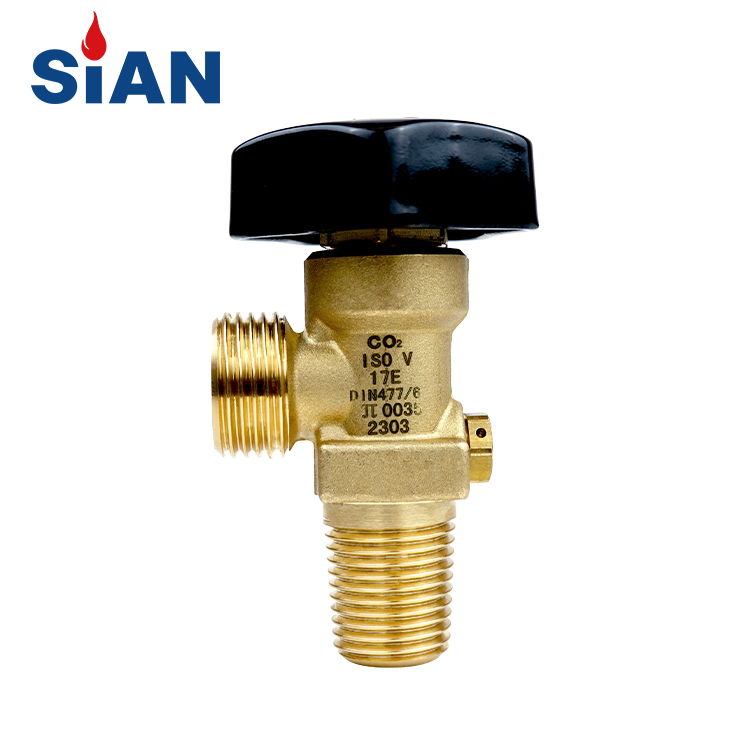
Industrial CO₂ gas cylinder valve from SiAN Valves.
Where CO₂ Is Used in a Brewery
Carbonation and Conditioning
The most visible use of CO₂ is beer carbonation. After fermentation, beer is often conditioned and cooled before or during carbonation. CO₂ dissolves more readily in cold beer, so temperature, pressure, contact time, and beer composition all affect the final result.
The required carbonation level varies according to the beer style and production method. Excessive gas can create unwanted foaming and an overly sharp mouthfeel, while insufficient carbonation can leave the beer flat. Consistent results depend on the complete carbonation system, including the gas source, regulator, pressure sensor, tank, diffuser, and control settings.
A cylinder valve supports this process by providing a secure method of opening or isolating the gas supply. The regulator and downstream control equipment then determine how much CO₂ enters the vessel.
Tank Head Pressure
CO₂ may be used to maintain controlled head pressure in storage, conditioning, or serving tanks. Stable head pressure can help protect the beer from oxygen exposure and support controlled transfer between vessels.
The pressure used in a brewery tank is normally much lower than the rated pressure of the valve fitted to the CO₂ cylinder. These are two different specifications. The cylinder valve must safely handle the cylinder’s rated conditions, while the regulator and process system control the lower pressure required by the tank.
This distinction is important when selecting components. A high-pressure cylinder valve should not be used as a substitute for a low-pressure regulator, and a downstream process valve should not be connected directly to a high-pressure cylinder without suitable pressure-reduction equipment.
Tank Purging and Beer Transfer
Before beer is transferred into a tank, keg, bottle, or can, breweries may use CO₂ to purge air from the receiving container. Reducing oxygen exposure can help protect flavor and storage stability.
CO₂ is also used to push beer between vessels and support counter-pressure filling. During these operations, the valve must provide reliable shut-off and maintain a secure connection while the regulator, hose, fittings, and filling equipment handle the required operating conditions.
The correct arrangement depends on the brewery’s equipment and process. A small kegging system, a cellar tank, and a high-speed filling line may require different valve and control configurations.
Understanding the Different Components in a CO₂ Gas System
A brewery gas system may contain several components that perform different functions. The cylinder valve controls access to the gas stored in the cylinder and allows the supply to be isolated. It is also the connection point between the cylinder and the regulator or high-pressure hose.
The regulator reduces cylinder pressure to the operating pressure required by the brewery equipment. It may include one or more pressure gauges and may supply a controlled pressure to the tank or distribution manifold.
A flow-control valve adjusts or isolates gas movement in a specific line. Depending on the system, this function may be manual or connected to an actuator. Sensors measure pressure or flow, while a controller may adjust the system according to programmed conditions.
Keeping these functions separate helps prevent incorrect product selection. A CO₂ cylinder valve may be suitable for gas storage and isolation, but it may not provide the fine control required for carbonation. That control normally comes from the regulator and downstream equipment.
What to Check When Selecting a Brewery CO₂ Valve
Pressure and Gas Service
The valve must be designed for CO₂ and rated for the pressure conditions of the cylinder or equipment where it will be installed. SiAN’s official CO₂ product listings show that different models have different working-pressure specifications, including 15 MPa, 20 MPa, 200 bar, and 250 bar.
These figures apply to specific models and configurations. They should not be treated as a universal pressure rating for all CO₂ valves. The cylinder, valve, regulator, hose, and downstream equipment must be checked as one connected system.
Cylinder Thread and Outlet Connection
Connection compatibility is just as important as pressure rating. Before ordering, confirm the cylinder neck thread, outlet thread, connection standard, nominal diameter, and installation direction.
Two valves may look similar while using different thread specifications. An incorrect connection can damage the cylinder, create leakage, or prevent the valve from sealing correctly. The valve should always be matched to the actual cylinder and regulator used by the brewery.
Materials and Sealing Components
Materials should be suitable for the gas, pressure, temperature, and working environment. Depending on the model, CO₂ valves may use brass, stainless steel, or aluminum alloy components. The sealing materials and surface treatment should be verified in the product documentation.
Breweries should not automatically assume that every industrial CO₂ valve satisfies all sanitary or gas-purity requirements. If the valve is used in a part of the system that may affect product quality, the material, cleanliness, gas grade, sealing components, and applicable approvals should be confirmed with the supplier.
Safety Functions and Documentation
Some CO₂ valve models may include a safety device or pressure-relief component, while others may provide only shut-off and connection functions. These features depend on the specific design.
For example, SiAN’s 08-805-799 CO₂ cylinder valve is listed with a 20 MPa working pressure and a 25 MPa safety device. The product page also identifies a specific operating-temperature range and TPED certification. These details apply to that model only and should not be extended to the entire product category.
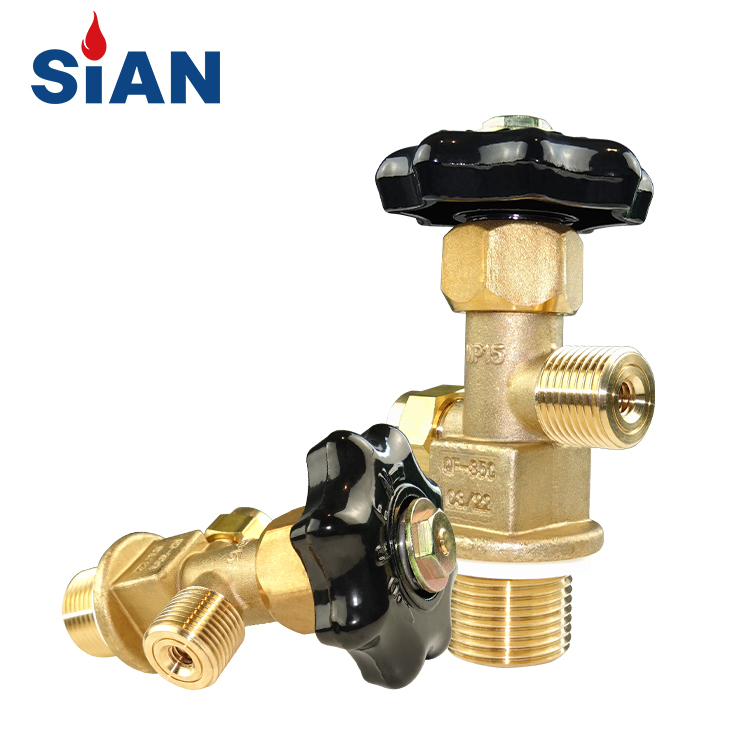
CO₂ valve product example from SiAN’s official product range.
Improving Carbonation Control and Gas Efficiency
Consistent carbonation depends on maintaining the relationship between beer temperature, tank pressure, gas flow, and contact time. A valve contributes by providing dependable gas isolation and delivery, but the final control result depends on the complete equipment arrangement.
In larger breweries, pressure sensors and digital controllers can monitor tank conditions in real time. The control system may then adjust a regulator, actuated valve, or gas supply according to the measured pressure. This type of automation should be confirmed according to the actual system design; it should not be assumed that every CO₂ cylinder valve includes automatic control.
Correct component selection can also reduce unnecessary CO₂ loss. Leakage, excessive purging, unsuitable pressure settings, damaged seals, and poor hose connections are common sources of waste. Regular inspection and correct adjustment are therefore as important as the valve itself.
Installation and Maintenance Considerations
CO₂ valves should be installed by qualified personnel using the manufacturer’s instructions. Before installation, inspect the valve body, threads, seals, handwheel, and outlet connection. Do not use force to connect an incompatible fitting, and do not modify the valve without approval from the manufacturer.
After installation, the complete gas line should be checked for leakage. Cylinders must be secured properly, and the brewery should provide adequate ventilation and CO₂ monitoring in enclosed areas. Because CO₂ is colorless and odorless, a leak may not be noticed without suitable detection and ventilation measures.
Maintenance should include checking for corrosion, damaged seals, loose fittings, abnormal pressure behavior, and difficulty operating the valve. A valve that fails a leak test or shows visible damage should be removed from service and assessed by qualified personnel.
SiAN CO₂ Valve Solutions
SiAN, operated by Ningbo Fuhua Valve Co., Ltd., supplies industrial gas cylinder valves and related gas-control products. Its official product range includes CO₂ cylinder valves, CO₂ bottle valves, and CO₂ pressure-maintaining valves.
For brewery projects, customers should provide the cylinder type, working pressure, connection requirements, gas-supply method, temperature conditions, and intended installation environment. SiAN can then confirm the appropriate product model and provide the relevant technical information.
Frequently Asked Questions
Is a CO₂ cylinder valve the same as a carbonation control valve?
No. A cylinder valve normally controls access to the stored gas and provides shut-off. Carbonation control usually depends on the regulator, pressure sensor, flow-control equipment, and tank configuration.
Can a high-pressure CO₂ valve be connected directly to a beer tank?
Not normally. A suitable pressure-reduction and control system is required between the high-pressure cylinder and the lower-pressure brewery equipment.
What pressure rating should a brewery CO₂ valve have?
The correct rating depends on the cylinder and valve model. SiAN lists different CO₂ valve configurations with different pressure specifications, so the exact model documentation must be checked before purchase.
What information should a brewery provide to the valve supplier?
The supplier should receive the CO₂ source, cylinder type, working pressure, inlet and outlet connections, operating temperature, installation environment, safety requirements, and whether manual or automated control is required.
Conclusion
In brewing, CO₂ control is a system-level task. The cylinder valve, regulator, pressure-control equipment, sensors, pipework, and filling equipment must work together to provide stable and safe gas delivery.
A correctly selected CO₂ valve supports reliable isolation, secure connections, and safe operation during carbonation, tank purging, beer transfer, and packaging. Before ordering, breweries should confirm the exact pressure rating, connection specifications, materials, sealing components, safety functions, technical documents, and certification scope for the selected model.
Visit SiAN Valves to review its CO₂ valve range and contact the supplier for model-specific recommendations based on your brewery gas system.

 Hot Line:+86 571 8768 0216


