Carbon dioxide plays an important role in the food and beverage industry. It is used for beverage carbonation, modified-atmosphere packaging, cooling processes, and other production applications. Because CO₂ is commonly stored and supplied under pressure, the valve used in the gas system must be selected carefully.
A suitable CO₂ valve helps control gas flow, isolate the cylinder, maintain system safety, and support stable production. However, valve selection should not be based on appearance or connection size alone. The working pressure, gas service, cylinder thread, outlet connection, temperature range, sealing performance, material, and applicable certification must all match the intended system.

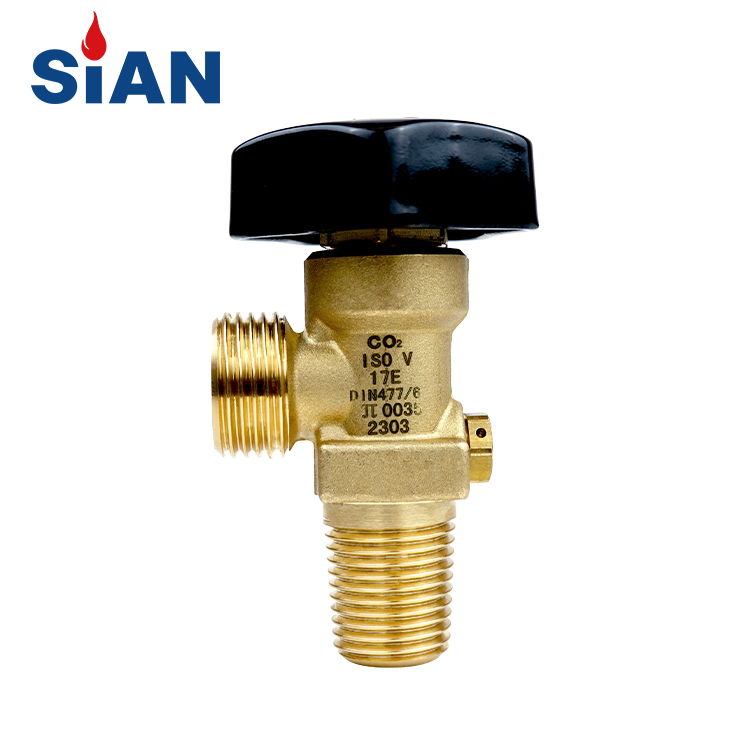
CO₂ gas cylinder valve supplied by SiAN Valves.
Why CO₂ Is Important in Food and Beverage Production
In beverage production, carbon dioxide is used to create the carbonation that gives soft drinks, sparkling water, beer, and other products their characteristic taste and mouthfeel. The level of carbonation directly impacts beverage quality—too much CO₂ leads to excessive fizz, while too little results in a flat and unappealing taste. Stable gas pressure and controlled flow are therefore important during filling and processing.
CO₂ may also be used in modified-atmosphere packaging. Depending on the product and packaging process, CO₂ can be used alone or together with other gases to replace part of the oxygen inside the package. This helps create the required internal atmosphere and can support product quality during storage. The correct gas composition and operating conditions depend on the food product, packaging material, and production process.
In addition, CO₂ can be used in certain refrigeration, dry-ice, and low-temperature cooling applications. The valve requirements vary according to the equipment design, gas state, pressure, temperature, and delivery method. A valve suitable for a beverage cylinder should not automatically be used in every CO₂ application.
How CO₂ Valves Support System Safety
Pressure-Rated Construction
CO₂ valves are designed to control gas in cylinders or supply systems that operate under pressure. Their pressure rating must be compatible with the cylinder, filling equipment, regulator, and downstream piping.
SiAN’s official CO₂ product listings show that different models have different specifications. For example, some listed products have working pressures of 15 MPa or 20 MPa, while other CO₂ bottle valves are listed at 200 or 250 bar. These values are model-specific and should not be treated as a universal rating for all CO₂ valves.
Using a valve with an unsuitable pressure rating can lead to leakage, malfunction, or serious equipment damage. The valve, cylinder, and connected components should therefore be evaluated as one complete system.
Materials and Sealing
Valve materials must provide adequate strength, corrosion resistance, and compatibility with the gas and working environment. Depending on the product design, materials may include brass, stainless steel, or aluminum alloys. The exact material, sealing components, and surface treatment should be confirmed in the manufacturer’s technical documentation.
Reliable sealing is equally important. The cylinder neck thread, outlet connection, gasket, O-ring, and sealing surface must all match the specified configuration. A valve should never be forced onto an incompatible cylinder or fitting simply because the connection appears similar.
Shut-Off and Pressure Relief
A CO₂ valve normally provides a means of opening and closing the gas supply. Some models or systems may also include a pressure-relief device, rupture disc, or other protective feature. These functions depend on the specific valve configuration and should be confirmed before purchase.
For example, the SiAN 08-805-799 CO₂ cylinder valve is listed with a 20 MPa working pressure and a 25 MPa safety device. This specification applies to that particular product and does not automatically apply to the entire CO₂ valve category.
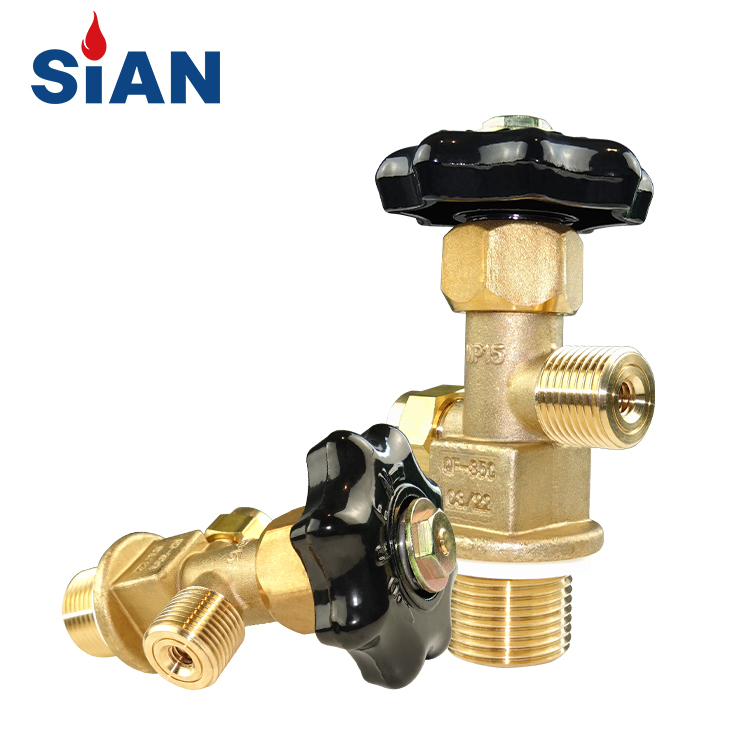
CO₂ valve product example from SiAN’s official product range.
Standards and Product Documentation
Food and beverage customers should request the documentation needed for technical review and installation. This may include a product datasheet, technical drawing, installation instructions, test report, temperature specification, declaration of conformity, and applicable certification.
Certification applies to a specific product and configuration. It should not automatically be assumed to cover every valve in the same product category. For this reason, the model number, pressure rating, connection type, and certification scope should be checked together.
How CO₂ Valves Improve Operating Efficiency
A properly selected valve helps maintain a stable and controllable gas supply. In beverage carbonation, consistent flow and pressure can support more uniform product quality and reduce process variation. In packaging and cooling applications, the valve must also match the required delivery rate and operating cycle.
Correct valve selection can help reduce unnecessary gas release. However, efficiency depends on the complete system, including the cylinder, regulator, pipework, fittings, control method, and maintenance condition. A high-quality valve cannot compensate for an unsuitable regulator, damaged seal, or poorly designed installation.
Automation is normally provided by the larger gas control system. Depending on the model, the CO₂ valve may provide manual or automatic shut-off, while regulators, sensors, controllers, and monitoring equipment manage pressure and process operation. These functions should be confirmed according to the actual application rather than assumed from the valve’s appearance.
What to Check Before Selecting a CO₂ Valve
The first consideration is the gas service. Confirm that the valve is designed for CO₂ and suitable for the required cylinder or supply equipment. The working pressure must then be checked against the actual filling, storage, and discharge conditions.
Connection compatibility is also essential. The cylinder neck thread, outlet thread, fitting standard, nominal diameter, and installation direction should match the existing equipment. Even a small difference in thread specification can cause sealing problems or prevent safe installation.
The required function should be clearly defined. Some systems need a basic cylinder shut-off valve, while others may require a pressure-maintaining valve, flow-control valve, or valve with a safety device. Temperature, outdoor exposure, cleaning conditions, corrosion risk, and frequency of operation should also be considered.
For food and beverage applications, do not assume that every industrial CO₂ valve is automatically suitable for all sanitary or gas-purity requirements. Confirm the material, cleanliness, gas grade, sealing materials, and applicable approvals with the supplier before ordering.
For technical communication or procurement, a labeled CO₂ valve structure diagram can also improve understanding. The illustration should identify the valve body, inlet thread, outlet connection, handwheel, sealing components, internal gas passage, and any model-specific safety device. It should be based on the selected product drawing rather than a generic valve diagram.
Installation and Maintenance
CO₂ valves should be installed by qualified personnel according to the manufacturer’s instructions. Before installation, inspect the valve, cylinder connection, threads, seals, and outlet for visible damage or contamination. After connection, carry out an appropriate leak test and confirm that the valve opens and closes correctly.
During operation, avoid impact, excessive force, unauthorized modifications, and incompatible fittings. Cylinders should be stored and handled according to applicable safety requirements, and the installation area should have suitable ventilation because high concentrations of CO₂ can create an asphyxiation risk.
Regular maintenance should include checking for leakage, corrosion, damaged handwheels, worn seals, abnormal pressure behavior, and connection problems. If a valve fails a leak test or shows visible damage, it should be removed from service and assessed by qualified personnel.
SiAN CO₂ Valve Solutions
SiAN, operated by Ningbo Fuhua Valve Co., Ltd., supplies industrial gas cylinder valves and related products for different gas applications. Its official product range includes CO₂ cylinder valves, CO₂ bottle valves, and CO₂ pressure-maintaining valves.
The company provides model-specific information such as working pressure, inlet thread, outlet connection, material, operating temperature, and certification details. Customers should use the exact product model and technical documentation when evaluating suitability for a food or beverage gas system.
Frequently Asked Questions
Can any gas valve be used for CO₂?
No. The valve must be designed for CO₂ and must match the required pressure, temperature, cylinder thread, outlet connection, sealing material, and application conditions.
What pressure can a CO₂ valve handle?
The pressure depends on the specific model. SiAN’s listed CO₂ products include different working-pressure specifications, such as 15 MPa, 20 MPa, 200 bar, and 250 bar. The product datasheet should always be checked before installation.
Do all CO₂ valves include a pressure-relief device?
No. A pressure-relief device or safety component may be included in some models, but this feature must be confirmed from the product specification.
Are all CO₂ valves suitable for food and beverage applications?
Not automatically. The valve must be evaluated for gas purity, materials, sealing components, cleanliness, pressure, connection type, and applicable approvals.
Conclusion
CO₂ valves are important components in food and beverage gas systems. They help control gas flow, support consistent carbonation, reduce leakage risks, and protect equipment operating under pressure.
The correct choice depends on the complete application rather than the valve name alone. Before ordering, confirm the gas service, working pressure, cylinder connection, outlet fitting, materials, temperature range, safety functions, documentation, and certification scope. Selecting a model-specific solution from an experienced manufacturer can improve system safety, process stability, and long-term operating efficiency.

 Hot Line:+86 571 8768 0216


