Oxygen is one of the most important gases used in medical and healthcare environments. It supports patients with breathing difficulties and is required for emergency treatment, respiratory therapy, anesthesia, intensive care, and other clinical procedures.
Because medical oxygen is commonly stored in high-pressure cylinders, its safe delivery depends on more than the gas cylinder itself. The valve, regulator, flow meter, hose, connector, and medical equipment must all work together as a compatible system.
Proper handling of medical oxygen is essential, and oxygen gas cylinder valves play a critical role in ensuring safe and effective delivery in clinical environments. Due to oxygen’s oxidizing properties, any uncontrolled release or leakage can increase fire and combustion risks, making the valve system an important part of the overall safety chain.

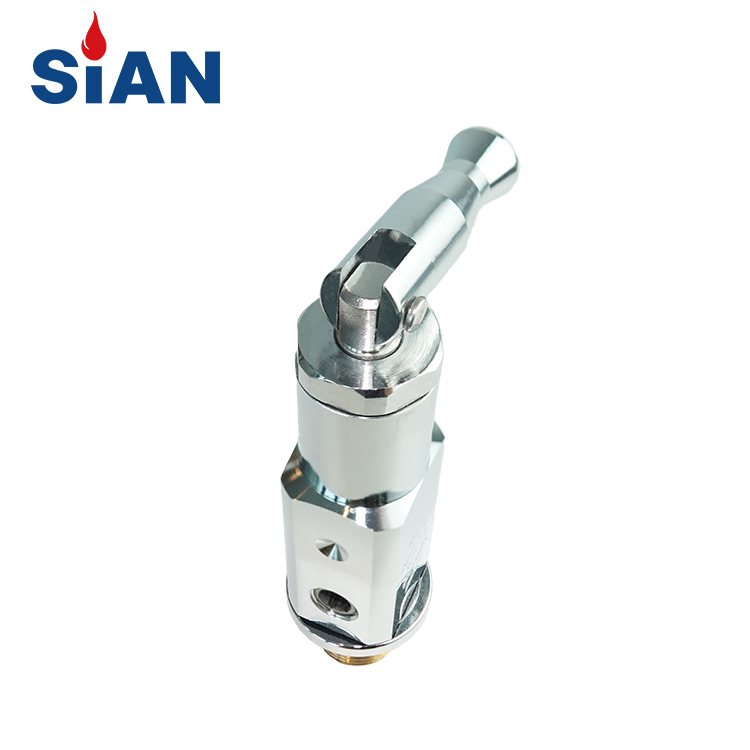
SiAN CGA870-2A3 medical-use oxygen cylinder valve. See the official product page for model-specific specifications.
Understanding the Role of an Oxygen Gas Cylinder Valve
An oxygen gas cylinder valve controls access to the oxygen stored inside a pressurized cylinder. Its primary functions are to open and close the gas supply, isolate the cylinder, and provide the connection point for the regulator or other approved equipment.
The cylinder valve is not normally responsible for setting the final flow rate delivered to a patient. That function is usually handled by a downstream pressure regulator, flow meter, needle valve, or medical oxygen delivery device. This distinction is important because the valve, regulator, and flow-control equipment must be selected as a complete system.
The requirements also vary between industrial oxygen and medical oxygen. Industrial oxygen may be used for cutting, welding, laboratories, or manufacturing processes, while medical oxygen is used in patient-care environments where equipment compatibility, cleanliness, connection standards, and operating procedures are especially important.
Why Oxygen Cylinder Valves Matter in Healthcare
Protecting Patients and Medical Staff
Proper handling of medical oxygen is essential because a valve failure can interrupt oxygen delivery or create an unsafe release of pressurized gas. In hospitals, ambulances, emergency rooms, and home-care environments, oxygen may be required immediately, leaving little tolerance for leakage, incorrect connections, or difficult operation.
A suitable valve helps provide dependable shut-off and secure cylinder connection. It also supports the correct operation of the regulator and delivery equipment. However, safe oxygen delivery depends on the entire installation, including the cylinder condition, regulator, tubing, connectors, and staff procedures.
Oxygen is not flammable by itself, but it greatly supports combustion. Any uncontrolled release or leakage can enrich the surrounding atmosphere and make combustible materials ignite more easily. Cylinders and valves should therefore be kept away from oil, grease, sparks, open flames, and other ignition sources.
Supporting Controlled Oxygen Delivery
Different patients and procedures require different oxygen flow rates. A patient receiving emergency oxygen may need a different setting from a patient undergoing long-term respiratory therapy. Oxygen used with anesthesia machines, ventilators, or other clinical equipment may also follow specific pressure and flow requirements.
The cylinder valve provides the main gas shut-off function, while downstream regulators and flow meters control delivery. Integrated flow meters and precision regulators ensure oxygen is delivered accurately to meet clinical and operational requirements, but these functions should not be attributed to the cylinder valve unless they are specifically included in the product design.
Medical staff should always adjust oxygen flow according to the treatment instructions and the requirements of the connected equipment. The valve should not be modified or used as an unapproved flow-control device.
Supporting Critical Medical Equipment
Many medical devices depend on a stable oxygen supply. Ventilators use oxygen as part of the breathing gas delivered to patients who cannot breathe independently. Anesthesia machines combine oxygen with other gases according to the procedure and equipment settings. Emergency oxygen kits and ambulance systems must also provide reliable gas access under demanding conditions.
In each case, the valve must match the cylinder and connection standard. A valve with the wrong outlet, pressure rating, or connection type can prevent the equipment from operating correctly or encourage unsafe adaptations.
Technical Features That Require Careful Evaluation
Pressure Rating and Connection Standards
Medical oxygen cylinders operate under high pressure, but the exact working pressure depends on the cylinder, valve, region, and product configuration. It should not be assumed that every oxygen valve is rated for the same pressure.
For example, SiAN’s CGA870-2A3 medical-use oxygen cylinder valve, model 08-859-700, is listed with a 15 MPa working pressure, a 3/4-16UNF inlet thread, and a No. 870 outlet connection. These specifications apply only to that particular model.
The valve must be compatible with the cylinder neck thread and the regulator connection used by the healthcare facility. A connection that appears similar may still use a different thread or standard. The correct model should always be confirmed through the product datasheet and equipment documentation.
Materials and Oxygen-Service Cleanliness
Oxygen valves require suitable materials and careful handling. Common valve-body materials may include oxygen-compatible brass or stainless steel, depending on the product design. Material selection alone is not enough; sealing components, surface condition, machining residues, and cleaning procedures must also be considered.
Oil, grease, dust, metal particles, and other contaminants can create serious risks in pressurized oxygen service. Oxygen-compatible components should be cleaned and maintained according to the applicable procedures. Unapproved lubricants or sealants should not be applied to oxygen connections.
Medical oxygen purity also depends on the gas source, cylinder, filling process, regulator, hose, and connected equipment. The valve contributes to system integrity, but it cannot guarantee gas purity by itself.
Residual Pressure Valves
Some medical oxygen cylinder valves use a residual pressure valve, or RPV. This design helps retain a small positive pressure inside the cylinder after use and reduces the risk of air, moisture, and contaminants entering the cylinder.
SiAN’s in-line RPV medical oxygen valve, model 08-850-800, is listed for oxygen service with a 20 MPa working pressure, PZ27.8 inlet thread, and G5/8 outlet thread. Its product information states that the valve retains approximately 55–85 PSI inside the valve to help protect the contents from contamination.
These details are specific to the listed RPV model. Not every oxygen cylinder valve includes a residual pressure function, and RPV-equipped cylinders may require compatible filling equipment and procedures.
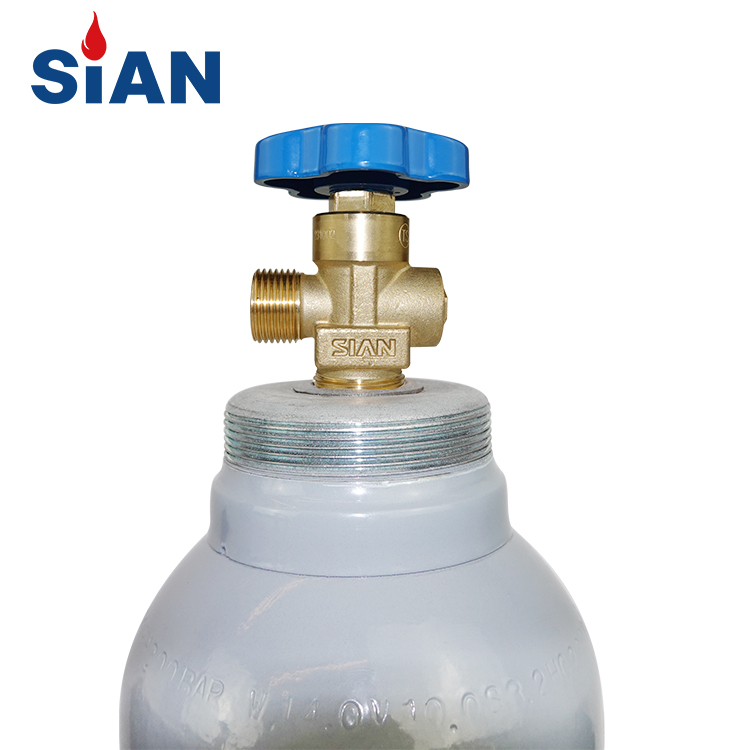
SiAN in-line residual pressure valve for medical oxygen cylinders. View the official product information.
Standards, Certification, and Documentation
Medical oxygen equipment may be subject to national regulations, healthcare requirements, cylinder standards, and connection specifications. The applicable requirements depend on the country, application, facility, and product configuration.
Some SiAN oxygen valve pages list standards such as GB15382 or specific connection standards. These references apply to the corresponding product and should not be interpreted as proof that every oxygen valve meets every medical certification requirement.
Before purchasing, healthcare providers and distributors should request the product datasheet, technical drawing, installation instructions, pressure and temperature specifications, test reports, declaration of conformity, and applicable certification documents.
Certification applies to a specific product and configuration. It should not automatically be assumed to cover an entire oxygen valve category or every medical application.
Selection and Installation Considerations
The correct oxygen cylinder valve should be selected according to the gas service, cylinder type, cylinder neck thread, outlet connection, working pressure, nominal diameter, valve structure, and intended application. Medical-use CGA connections may differ from industrial oxygen connections, so a general industrial oxygen valve should not be substituted without technical confirmation.
Installation should be carried out by trained personnel. Before connection, inspect the valve, cylinder, threads, seals, and outlet for visible damage or contamination. Use only compatible regulators, connectors, and accessories. Never use force to connect an incorrect fitting.
After installation, the complete system should be checked for leakage. The cylinder must be secured in an upright position and stored in a clean, dry, ventilated area away from heat, oil, grease, combustible materials, and unauthorized access.
Maintenance should include checking for damaged seals, corrosion, abnormal pressure behavior, difficult operation, and connection problems. If the valve fails a leak test or shows visible damage, it should be removed from service and inspected by qualified personnel.
SiAN Oxygen Valve Solutions
SiAN, operated by Ningbo Fuhua Valve Co., Ltd., supplies industrial gas cylinder valves, medical-use valves, oxygen valves, and residual pressure valve solutions. Its official product range includes O₂/Air/N₂ cylinder valves, medical-use CGA valves, and medical oxygen residual pressure valves.
Customers should provide the gas type, cylinder standard, working pressure, inlet and outlet connections, intended healthcare application, and documentation requirements so the appropriate model can be confirmed.
Frequently Asked Questions
Does an oxygen cylinder valve control the patient’s final oxygen flow?
Usually, the cylinder valve opens or isolates the gas supply. The downstream regulator, flow meter, or medical oxygen device normally controls the final delivery pressure and flow.
Can an industrial oxygen valve be used in a medical oxygen system?
Not automatically. Medical applications may require specific connections, cleanliness procedures, materials, documentation, and approvals. Suitability must be confirmed for the exact model and system.
Are residual pressure valves required on every medical oxygen cylinder?
No. Residual pressure functions are model-specific and may also require compatible filling equipment and operating procedures.
What should hospitals check before purchasing an oxygen cylinder valve?
They should confirm the gas service, cylinder connection, outlet standard, pressure rating, materials, sealing components, temperature range, safety functions, test reports, declaration of conformity, and certification scope.
Conclusion
Oxygen gas cylinder valves are essential components in healthcare oxygen systems. They provide gas shut-off, cylinder isolation, and a secure connection to regulators and medical delivery equipment.
Their safety depends on correct pressure rating, oxygen-compatible materials, clean handling, reliable sealing, suitable connections, and proper installation. Because oxygen valve specifications and certifications vary by model, healthcare providers should evaluate the complete system and verify the documentation for the exact product configuration.
Visit SiAN Valves to explore oxygen gas cylinder valve solutions and request model-specific technical information for your medical or healthcare application.

 Hot Line:+86 571 8768 0216


