In today’s gas industry, valve selection has a direct impact on system safety, reliability, and operating efficiency. This is especially important in compressed natural gas applications, where gas is stored and transferred under high pressure.
CNG valves and traditional gas valves may look similar, but they are not automatically interchangeable. Their pressure ratings, materials, sealing systems, connections, safety features, and intended applications can be very different. Selecting a valve based only on appearance or size may lead to leakage, connection problems, equipment damage, or unsafe operation.
This article explains the main differences between CNG valves and general-purpose gas valves and provides practical guidance for selecting the right option for a specific gas system.

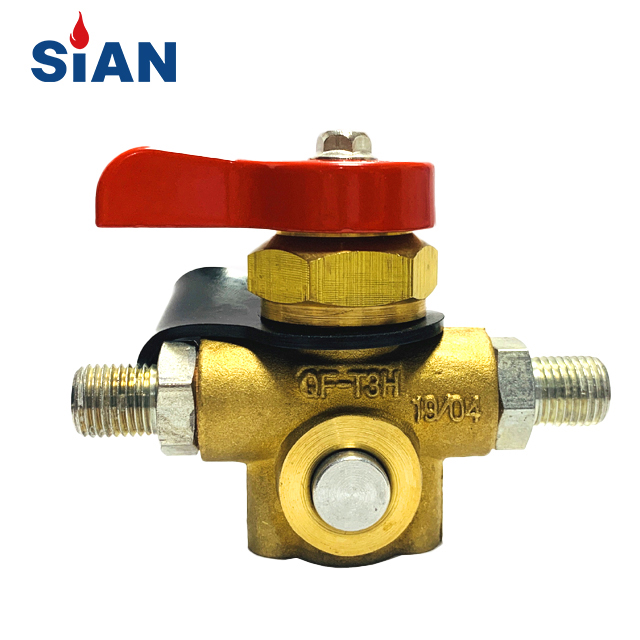
SiAN QF-T3H CNG cylinder valve for high-pressure gas cylinder applications.
What Are CNG Valves?
CNG valves are designed for compressed natural gas systems. CNG is natural gas stored in a compressed gaseous state, usually inside cylinders, storage modules, vehicles, or filling equipment.
Depending on the design, a CNG valve may be used for gas filling, storage, discharge, isolation, or pressure relief. Typical applications include natural gas vehicles, CNG filling stations, industrial gas cylinders, and high-pressure natural gas systems.
CNG valves must be selected according to the cylinder design, working pressure, gas connection, sealing requirements, operating temperature, and applicable standard. SiAN’s CNG product range includes shut-off cylinder valves, industrial cylinder valves, filling valves, and pressure relief valve solutions.
Several SiAN CNG models, including the QF-T3H, CTF-3, and QF-T1B, are listed with a working pressure of 20 MPa. However, the exact specifications must always be confirmed for the selected model and application.
What Are Traditional Gas Valves?
“Traditional gas valve” is not a single technical product classification. In general, it refers to valves used in residential, commercial, industrial, or low- and medium-pressure gas systems.
These valves may include ball valves, globe valves, gate valves, and general shut-off valves. Their specifications depend on the gas medium, pressure range, temperature, connection type, and operating conditions.
Some traditional gas valves may be suitable for natural gas, but this does not mean they are suitable for CNG. A valve designed for a conventional pipeline or appliance should not be installed in a high-pressure CNG system unless its pressure rating, gas compatibility, connections, sealing materials, and certification have been confirmed.
Key Differences Between CNG Valves and Traditional Gas Valves
1. Pressure Handling Capacity
The most important difference is the pressure range for which the valve is designed. CNG valves are developed for compressed natural gas systems and must withstand the pressure specified by the cylinder, vehicle, storage module, or filling equipment.
Many CNG cylinder valves are designed for working pressures around 20 MPa, although requirements vary according to the system and applicable standard. For example, the SiAN QF-T3H model is listed with a 20 MPa working pressure and a CNG medium specification.
Traditional gas valves may be designed for lower-pressure systems, although some industrial valves can also be manufactured for high-pressure service. Therefore, the distinction should not be based on the valve name alone. The actual working pressure, test requirements, pressure cycles, and product documentation must be checked before installation.
2. Materials and Durability
CNG valve materials must provide sufficient mechanical strength, corrosion resistance, dimensional stability, and compatibility with compressed natural gas. Depending on the design, suitable materials may include brass, stainless steel, or aluminum alloys.
The final material depends on the valve structure, pressure requirements, gas composition, operating temperature, and applicable standard. SiAN’s listed CNG valve products include copper-alloy and brass-alloy constructions. The material specification should be confirmed for each model rather than assumed across the entire product range.
Traditional gas valves may also use brass, stainless steel, cast iron, bronze, or other materials. However, a material suitable for a lower-pressure gas installation may not provide the required performance in a high-pressure CNG system.
Durability also depends on machining accuracy, thread quality, sealing surfaces, surface treatment, and resistance to repeated filling and discharge cycles.
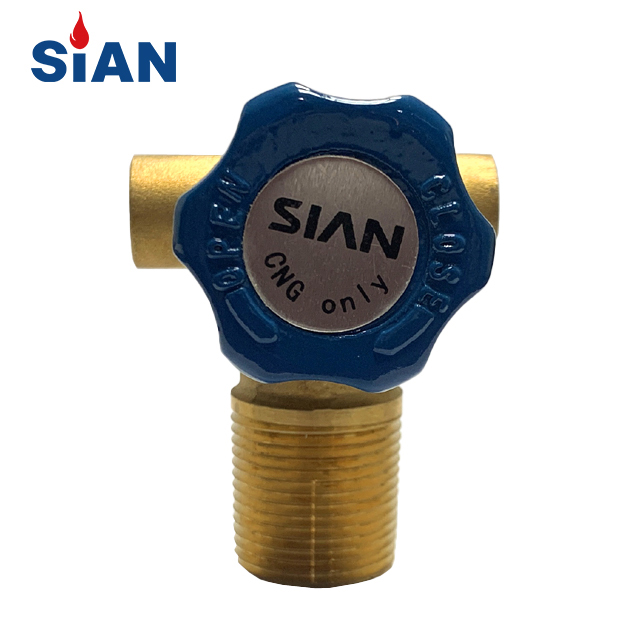
SiAN CTF-3 CNG cylinder valve with copper-alloy construction.
3. Safety and Pressure Relief
CNG systems require careful control of abnormal pressure conditions. Depending on the cylinder and system design, a CNG valve may be combined with a pressure relief device, emergency shut-off function, or another safety component.
Pressure relief protection is not automatically included in every CNG valve. It may be integrated into the valve, installed separately, or provided by another part of the system.
Traditional gas valves may provide basic shut-off control, but they are not necessarily designed for the pressure, vibration, temperature, and emergency conditions found in CNG applications.
Before ordering, confirm whether the selected valve includes a safety device, what pressure or temperature setting applies, and whether the configuration complies with the cylinder and project requirements. For example, SiAN’s QF-T1B product information lists a specific safety device setting, but this information applies only to that model.
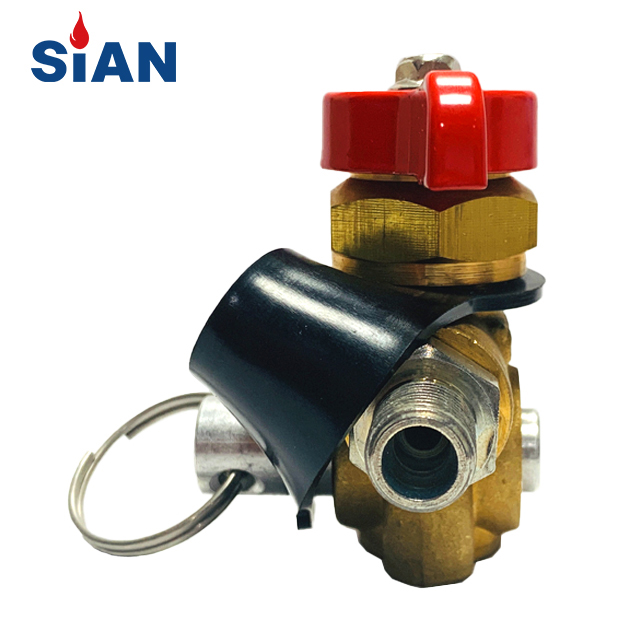
Product detail view of a SiAN CNG cylinder valve.
4. Flow Control and Shut-Off Function
Both CNG valves and traditional gas valves can control gas flow, but their functions depend on the specific valve design. A cylinder valve may primarily provide isolation and shut-off, while a filling valve, pressure relief valve, regulator, or flow-control component may perform a different function.
CNG valves are designed to work with high-pressure natural gas storage and delivery equipment. Their internal passage, sealing structure, operating mechanism, and outlet connection must match the intended pressure and flow conditions.
It is also important to distinguish between a valve and a regulator. A valve normally controls whether gas is allowed to pass, while a regulator reduces pressure and maintains a controlled downstream pressure.
5. Connections and Application
A CNG valve must match the cylinder neck thread, outlet thread, hose, regulator, filling connector, and other equipment in the system. Even a small difference in thread type, size, pitch, or sealing method can cause installation failure or gas leakage.
SiAN’s QF-T3H model is listed with a 12 mm inlet thread, an M12 × 1.25-6g outlet thread, a 20 MPa working pressure, and a 4 mm nominal diameter. The CTF-3 model is listed with a PZ27.8 inlet thread, an M12 × 1-6H outlet thread, a 20 MPa working pressure, and a 6 mm nominal diameter.
These specifications apply only to the respective models. Buyers should confirm the complete technical drawing and connection dimensions before placing an order.
CNG valves are commonly used in natural gas vehicles, CNG filling equipment, industrial gas cylinders, storage modules, and high-pressure natural gas systems. Traditional gas valves are used across a wider range of residential, commercial, and industrial gas installations.
How to Choose the Right Valve
Before purchasing a CNG valve or traditional gas valve, provide the supplier with the gas medium, working pressure, cylinder or pipeline type, inlet connection, outlet connection, operating temperature, filling frequency, installation environment, and required certification.
Selection Factor | Why It Matters |
Gas medium | Confirms compatibility with CNG or another gas |
Working pressure | Ensures the valve matches the system pressure |
Cylinder or pipe connection | Prevents installation and sealing problems |
Outlet connection | Confirms compatibility with regulators and hoses |
Safety device | Verifies pressure relief requirements |
Operating temperature | Helps determine suitable materials and seals |
Filling frequency | Supports durability assessment |
Applicable standard | Confirms project compliance |
The valve should be selected as part of the complete gas system rather than by pressure rating or price alone.
Safe Installation and Maintenance
CNG valves should be installed by qualified personnel using compatible tools, fittings, seals, and connection procedures. Before installation, inspect the valve body, threads, sealing surfaces, and protective caps for damage or contamination.
Avoid excessive tightening force, incorrect tools, and unsuitable sealing materials, as these may damage the threads or sealing surfaces. After installation, the system should be checked for leakage using an appropriate inspection method.
Cylinders and CNG equipment should be protected from impact, excessive heat, contamination, and unauthorized operation. Any valve showing corrosion, deformation, damaged threads, leakage, or abnormal operating resistance should be removed from service and professionally assessed.
Why Choose SiAN Valves?
SiAN Valves, operated by Ningbo Fuhua Valve Co., Ltd., supplies LPG valves, industrial gas cylinder valves, CNG valves, medical gas valves, and fire extinguisher valves.
Its CNG product range includes shut-off, industrial cylinder, filling, and pressure relief valve solutions. Product pages provide model-specific information such as gas medium, working pressure, connection dimensions, nominal diameter, material, safety device, and applicable standards.
Customers can contact SiAN to confirm the correct model, technical drawing, gas compatibility, pressure rating, connection dimensions, testing, certification, and OEM requirements. Visit the SiAN CNG valve product range for more information.
Frequently Asked Questions
Are CNG valves and traditional gas valves interchangeable?
No. They may differ in pressure rating, gas compatibility, materials, sealing structure, connections, safety features, and certification.
Are all CNG valves designed for the same pressure?
No. Pressure ratings vary according to the valve model, cylinder, vehicle, storage system, and applicable standard.
Do all CNG valves include pressure relief protection?
No. Pressure relief protection may be integrated into the valve, supplied separately, or provided by another part of the system.
What material is suitable for a CNG valve?
Brass, stainless steel, and aluminum alloys may be used depending on the design and application. The final material should be confirmed according to pressure, gas compatibility, temperature, and applicable standards.
Conclusion
CNG valves are designed for the pressure, connection, sealing, safety, and operating requirements of compressed natural gas systems. Traditional gas valves cover a broader range of applications and may not be suitable for high-pressure CNG service.
The correct choice should be based on the gas medium, working pressure, materials, connection standards, safety devices, operating environment, certification, and complete system design.
SiAN provides CNG cylinder valves and related gas valve solutions for different industrial applications. By confirming the technical requirements before ordering, businesses can reduce leakage risks, improve system reliability, and select a valve suitable for safe long-term operation.

 Hot Line:+86 571 8768 0216


